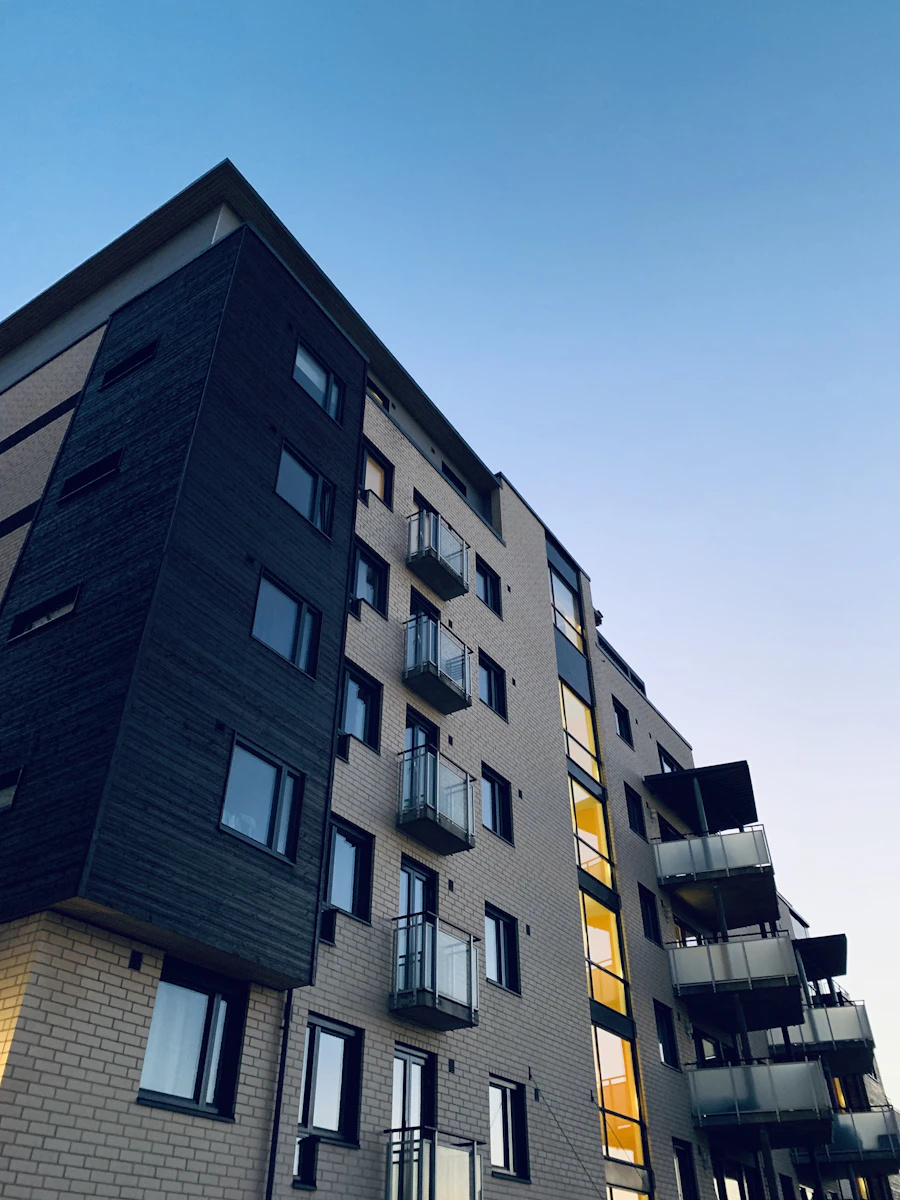
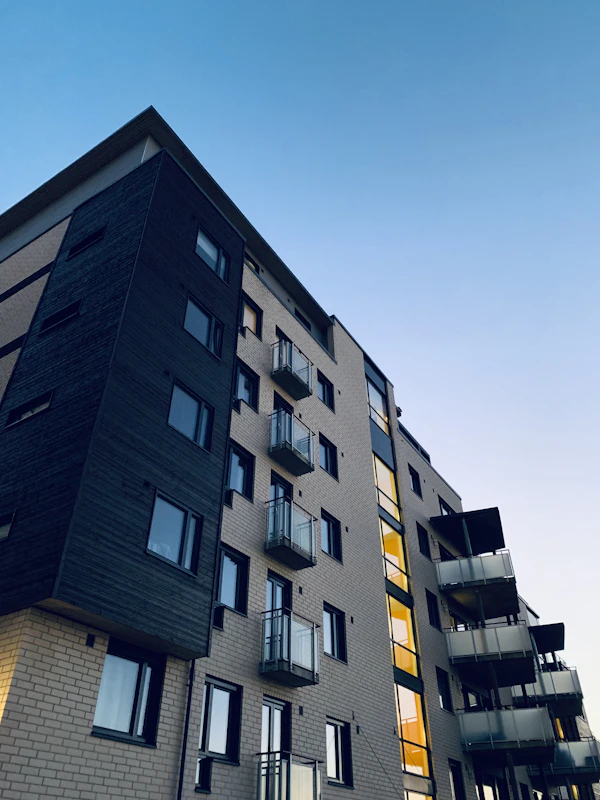
Modern housing society with solar installation
Residential Solar — Housing Societies

Solar for Housing Societies

Shared solar for your society slashes common area electricity bills by 70–80%. Power lifts, pumps, lighting, and the clubhouse — shared cost, maximum savings for every resident.

70–80% bill reduction Subsidy up to 40% Committee-friendly process Zero maintenance burden
🏠
200+ Societies installed
70–80% Common area savings
📅
4–6 yrs Payback period
📍
Free society site survey
💰
Govt. subsidy up to 40%
Common area fully covered
🔨
AMC-free maintenance
MNRE certified installers
🌿
Green Society Certification
How Society Solar Works

Shared solar, shared savings — for every resident

A housing society solar system is installed on the common rooftop area and connected directly to the society's common electricity meter. The generated power feeds into common-area loads — elevators, water pumps, corridor and parking lighting, clubhouse, and security — dramatically reducing the monthly common-area electricity bill that every flat owner contributes to.

The investment is made by the society as a whole through the maintenance corpus or a special levy. Because the system capacity is much larger than individual rooftop systems, the cost-per-kilowatt drops significantly, and the government subsidy is proportionally higher — making the ROI even more attractive for group installations.

FGPS Solar works directly with the Residents' Welfare Association (RWA) or managing committee, handling everything from the initial feasibility study and committee presentation to DISCOM net metering approval, installation, and post-commissioning AMC.

200+ Housing societies installed
70–80% Common area bill reduction
4–6 yr Average payback period
Modern apartment complex with solar panels
🏠
Committee-friendly process Proposal decks, RWA presentations & paperwork — all handled by us
Common Area Loads

Everything your society runs — powered by the sun

Society solar eliminates electricity costs on the highest-consumption shared loads. Here is exactly what gets powered.

🛡️

Elevators & Lifts

Lifts are among the largest consumers in high-rise societies. Solar directly offsets lift motor electricity, delivering significant monthly savings on every floor.

High consumption load
💧

Water Pumps

Submersible, booster, and overhead tank pumps run continuously. Solar powers the entire water supply infrastructure, eliminating one of the biggest grid draws.

Continuous load
💡

Common Area Lighting

Corridors, staircases, parking lots, entrance lobbies, and garden paths — all lit from solar generation and battery backup, round the clock.

24/7 requirement
🏟

Clubhouse & Amenities

AC, lighting, fans, entertainment systems, and kitchen loads in the clubhouse and gym are fully covered by solar during peak daytime generation hours.

Peak daytime use
📷

Security Systems

CCTV cameras, intercom panels, boom barriers, and access control systems draw power 24 hours a day — solar handles this cleanly with battery backup.

Always-on load
🏈

Swimming Pool

Pool pumps, filtration systems, and underwater lighting are high-energy loads perfectly matched to solar — run them virtually free during daylight hours.

Seasonal high load
Society Benefits

Six reasons your RWA should go solar today

From financial savings to green credentials, society solar delivers measurable returns for every stakeholder — residents, committee, and developers alike.

70–80%

Common Area Bill Reduction

Directly cut the society's monthly DISCOM bill on common loads. Savings are immediate from Month 1 of commissioning and grow with electricity tariff increases every year.

👥
Lower

Shared Investment Per Unit

Costs are distributed across all flat owners through the society corpus. The per-unit share of a 40 kW society system is far lower than an equivalent individual rooftop installation.

🏫
Up to 40%

Government Subsidy

Under PM Surya Ghar and MNRE schemes, group housing societies qualify for capital subsidies of up to 40% of system cost — substantially reducing payback period.

🏠
+10–15%

Property Value Increase

Solar-powered green societies command a premium in the resale market. Buyers actively seek energy-efficient housing, making your flat more valuable and faster to sell.

🔨
Zero

Maintenance Burden

Solar panels have no moving parts and require only periodic cleaning. FGPS Solar's comprehensive AMC covers all monitoring, preventive maintenance, and component warranties.

🌿
Certified

Green Society Certification

Achieve IGBC Green Homes or equivalent green building ratings. Solar adoption qualifies your society for environmental certificates that boost brand value and attract eco-conscious residents.

The Society Process

From committee vote to savings in 4 steps

We make the entire journey smooth for your managing committee — from the first presentation to annual savings reports. Most societies are live within 3–5 weeks of approval.

📋
1
Week 1

Committee Approval

We prepare a tailored feasibility report and RWA presentation deck with savings projections, ROI timeline, and subsidy breakdown for your committee to vote.

What we provide Detailed proposal with satellite roof assessment, unit-wise cost sharing calculator, subsidy eligibility confirmation, and sample resolution format for the AGM.
🔎
2
Week 1–2

Site Survey

Our engineers conduct a detailed on-site inspection — rooftop structural load, cable routing, common meter assessment, and shading analysis — at no cost.

What we assess Terrace area and orientation, structural load-bearing capacity, existing electrical panel compatibility, shading from water tanks and buildings, and DISCOM net metering feasibility.
⚙️
3
Week 2–4

Installation

Our certified crew installs the system with zero disruption to residents. All work is completed within agreed timelines using premium Tier 1 panels and inverters.

What's included Panel mounting structures, Tier 1 solar panels, string/central inverters, AC/DC cabling, earthing, lightning arrester, monitoring system installation, and DISCOM net metering application.
📈
4
Month 1 onwards

Savings Distribution

From the first bill cycle, savings appear on the common area electricity bill. The committee can distribute reduced maintenance charges to all flat owners.

What you receive Monthly generation reports via app, automated alert system, reduced DISCOM bills, net metering credits, and annual performance review from FGPS Solar's team.
System Sizing Guide

Right-sized solar for every society

System capacity is matched to your society's common-area load, number of units, and available rooftop area. Our engineers size the system for maximum self-consumption and minimum payback.

System Size Society Type Units Covered Monthly Generation Annual Savings Approx. Payback
10–20 kW Small Society Low-rise / Independent housing 20–40 units 1,200–2,400 kWh ₹1.2–2.5L 4–5 years
20–50 kW Medium Society Most Popular Mid-rise apartment complex 50–100 units 2,400–6,000 kWh ₹2.5–6L 4–6 years
50–100 kW Large Society High-rise / gated community 100–300 units 6,000–12,000 kWh ₹6–12L 4–6 years
100+ kW Township / Campus Integrated township or campus 300+ units 12,000+ kWh ₹12L+ 5–7 years

Estimates based on Rajasthan solar irradiance of 5.5–6 kWh/m²/day. Actual savings depend on common-area load profile and DISCOM tariff. Get a detailed assessment →

Case Study

Real savings from a real society

See what a 40 kW society solar installation actually delivers — in rupees saved, bills slashed, and residents satisfied.

Pune housing society solar installation
★ Featured Project

Shree Sai Residency,
Pune Housing Society

A 120-unit gated society in Pune with a 40 kW rooftop solar system powering lifts, pumps, corridor lighting, and the clubhouse — with zero disruption during installation.

Project Outcomes — Year 1

40 kW System capacity installed
₹5.8L Annual savings in Year 1
78% Common area bill reduction
4.9 yr Projected payback period
"The committee was skeptical at first, but FGPS Solar's presentation made it simple. We approved it in one AGM. The savings in the first month alone convinced every resident — our maintenance charges have dropped by nearly ₹800 per flat per month." — Mr. Ramesh Kulkarni, RWA President, Shree Sai Residency
FAQ

Society solar questions answered

Common questions from RWA committees and residents before approving a society solar project. Our team is available to present answers directly to your committee — just call us.

Solar panels on apartment building

The RWA or managing committee needs to pass a resolution approving the solar installation — typically at an Annual General Meeting (AGM) or an Extraordinary General Meeting (EGM) called specifically for this purpose. A simple majority vote is usually sufficient under most society bye-laws. FGPS Solar provides a complete documentation package: a feasibility report, detailed proposal with ROI projections, per-unit cost-sharing breakdown, subsidy confirmation letter, and a draft resolution for the committee to adopt. We are also happy to attend the meeting and present directly to residents to answer questions — at no charge.

There are three common approaches societies use. First, a one-time special levy proportional to flat size (sq ft) or equal per unit — the most straightforward method. Second, payment from the existing society maintenance corpus or sinking fund if it has sufficient balance. Third, an EMI arrangement where the society takes a solar loan and repays from monthly savings on the electricity bill — effectively making the system cash-flow positive from Month 1. FGPS Solar helps you model all three options with detailed financials so the committee can choose what suits your society best.

FGPS Solar offers comprehensive Annual Maintenance Contracts (AMC) that cover preventive maintenance, remote system monitoring, fault diagnosis and rectification, cleaning scheduling reminders, and inverter/component warranty claims management. Solar panels themselves require very little upkeep — primarily periodic cleaning to remove dust, which can be done by your existing housekeeping staff following our simple guidelines. The system comes with a 25-year performance warranty on panels and a 10-year warranty on inverters. Your society's committee simply receives a monthly performance report — no technical knowledge needed.

Yes — housing societies are eligible for net metering in Rajasthan under the RERC (Rooftop Solar Power Plants) Regulations. The net meter is installed on the society's common electricity connection. Any surplus solar energy exported to the DISCOM grid earns units credit that offsets future common-area grid consumption. The benefit accrues to the society as a whole through reduced common electricity bills, which translates directly to lower maintenance charges for all residents. FGPS Solar handles the complete net metering application and liaises with JVVNL, AVVNL, or JDVVNL on your behalf from application to approval.

For most medium-to-large housing societies in Rajasthan, payback is achieved within 4 to 6 years. With the government capital subsidy of up to 40% reducing the upfront cost, and Rajasthan's 300+ sunny days providing excellent generation, the economics are among the best in India. After payback, the system generates free electricity for the remaining 19–21 years of its 25-year design life — delivering net lifetime savings of ₹40–80 lakhs for a typical 40–60 kW installation. The system also appreciates property values, which is an additional financial benefit for every flat owner.

Ready to present solar to your committee?

Get a free feasibility report, RWA presentation deck, and per-unit savings estimate — tailored to your society. We attend committee meetings at no cost.

Get Free Society Proposal Call Now — +91 99999 99999

● Free feasibility study    ● No-obligation proposal    ● Committee presentation included

Explore More

Other solar solutions from FGPS Solar

From individual rooftop systems to utility-scale ground mounts, agrivoltaics, and full EPC contracts — we cover every solar need across Rajasthan.

Call Us Free Society Proposal →